


Hey Girlies,
If this past week has felt really heavy for you too, we see you. We’re with you.
I (Cass) moved to Minneapolis last year because this city is magnetic. It’s diverse. It’s rich in culture and art. It cares deeply for its neighbors.
It’s heartbreaking to watch those neighbors get harassed, traumatized, and kidnapped because they look like they don’t belong here (which is incredibly racist, BTW). It’s also quite terrifying to watch as part of the country justifies the murder of an unarmed mother, wife, and U.S. citizen.
To be clear: many of the people targeted by ICE are U.S. citizens, legal residents, documented immigrants, asylum seekers, and refugees. They’re mothers dropping their kids off at school. They’re fathers clocking in for a 12-hour shift. They’re teenagers walking down the street.
Regardless of immigration status, every single person in the U.S. has legal rights. These rights are being violated at every turn. To think otherwise is insane.
This poem by Nikita Gill encapsulates what many of us are feeling. (I purposely included the caption, too, because it’s so well said):
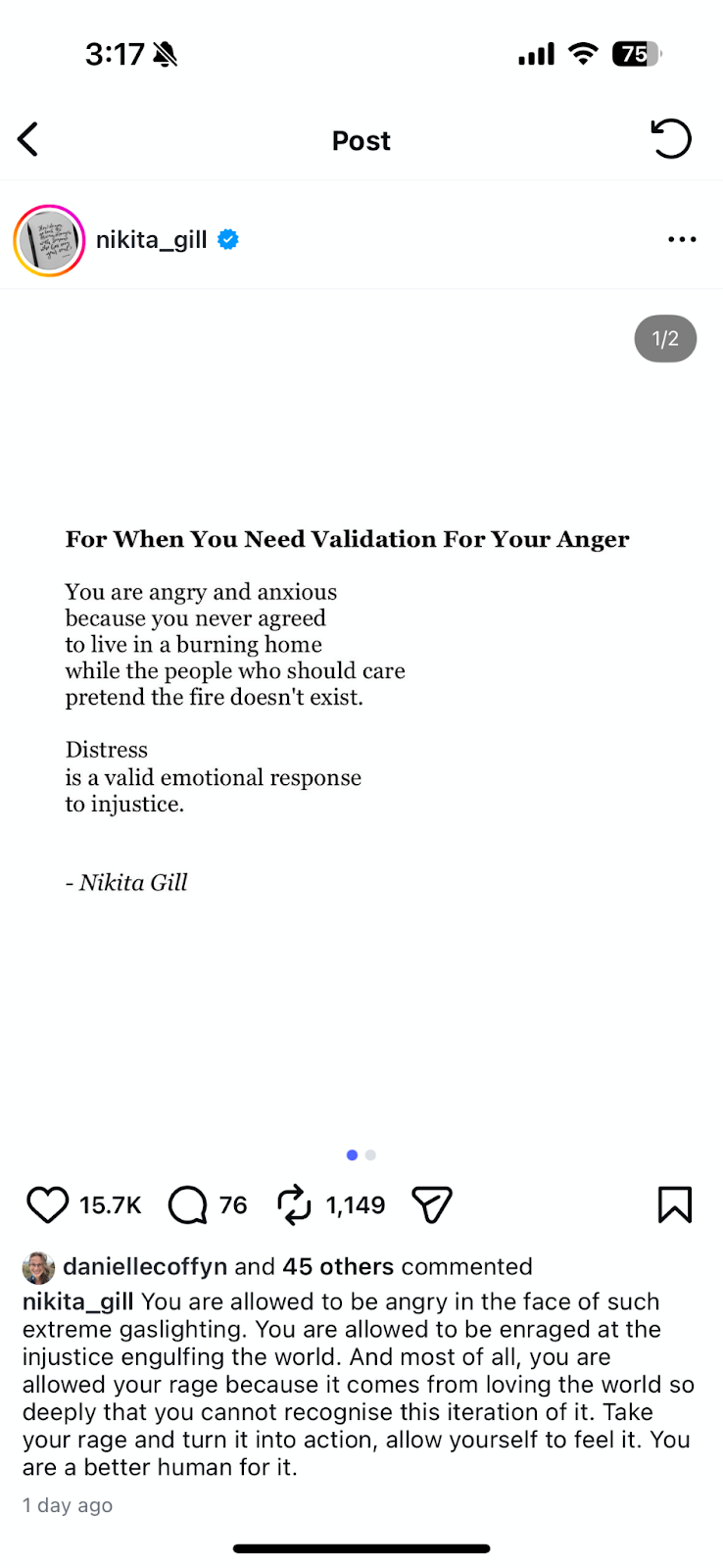
I will not lie, this past week I have felt both hopeless and helpless. But that’s exactly what this administration wants us to feel – paralyzed so we do nothing.
But now is the time for us to dig into our toolkits and act. That looks like:
Peacefully protesting
Calling our elected officials and encouraging them to oppose funding for ICE and protect our vulnerable community members from inhumane treatment - (See these scripts for inspo.)
Supporting our local immigrant-owned businesses (and those businesses loudly fighting back)
Donating money, time, and/or resources to organizations serving immigrant and low-income communities
Having open conversations with our family and friends about the injustices going on
If you’d like to help those in Minnesota who are vulnerable, we have some resources available in the Resource Roundup below.
And of course, thanks for being here. 💛
On the pod 🎧
You don’t need another budgeting method. You need a money system that works during your worst week, not your best one.
This week on the podcast, we’re talking with Kelsa Dickey — a former financial advisor who walked away from traditional finance because it wasn’t helping people feel calmer, more confident, or more in control. What she teaches instead is a completely different way of thinking about money — one that replaces rigid rules, perfect months, and self-blame with clarity, flexibility, and buy-in.
In this episode, we get into:
Why the first step in “getting your finances together” is overrated — and what actually matters more
The surprisingly simple system Kelsa uses to help people stop feeling behind
Why most budgeting advice ignores your time, energy, and real life (and sets you up to quit)The metric she uses with high achievers when numbers alone aren’t enough
Kelsa walks through how to adjust a money plan without blowing it up, how to build flexibility into your budget on purpose, and why progress often shows up emotionally before it shows up numerically.
Plus: Listen for the moment she explains why sticking to the plan is usually less important than knowing how to respond when the plan breaks.
This one changes how you think about what “doing well with money” actually means.
Listen wherever you get your podcasts.
More of a reader? Check out the full episode breakdown on our blog.
🎤 Mic drop moment:
“There is no single financial strategy that works perfectly for everybody — it’s about refining what works for you without judging yourself.”
Resource roundup 📚
Kathryn Edwards has a Ph.D. in economics — and a gift for explaining the economy in terms that make sense. Her recent Substack article, The Empowerment Trap, argues that it’s too easy for women’s economic progress to mask society’s failings. In other words, if you earn less than your male counterparts, handle most of the household chores, and miss out on promotions, it’s not your fault.
If one of your 2026 goals is to spend less money, this tip from the Substack Financially Independent(ish) might help: “Unapologetically indulge in a cheap hobby.” Whether it’s cooking, crocheting, reading, or hiking, hobbies require your limited time and attention — which, when left unchecked, more easily falls prey to Instagram ads and Target runs.
Here are a few Minnesota organizations you can support with your time, money, or by spreading awareness online:
Food banks to support in Minnesota: Joyce Uptown Food Shelf, Second Harvest Heartland, and The Open Door Pantry (and check out our SNAP episode for more ways to support food banks and neighbors in need).
Grassroots organizations to support in Minnesota: The Immigrant Law Center of Minnesota (ILCM), MN. Immigrant Rights Action Committee (MIRAC), Minnesota Interfaith Coalition on Immigration (ICOM), and Immigrant Defense Network.
Catchup corner 💬
How we’ve been fostering community:
E: Attending events! I’m trying to be more present in my local community, which means I need to leave the house (lol. Obvious, but not always easy as someone who works from home.) Lately, I’ve been going to book clubs, yoga, community meetings, running meetups, and more.
C: One of my intentions for 2026 is to invite more people into my home to share a meal, craft, watch a movie, etc. So this Thursday, I’ve invited two gals who live in my building over for a crochet night. It will be v lowkey and chill, but I’m looking forward to strengthening my relationships with my neighbors.
What we’ve been reading/watching/listening to:
E: I’d heard about Cait Flanders’ book, The Year of Less, several times over the years, but never picked it up. A couple weeks ago, I decided I was intrigued enough to change that! The book wasn’t quite what I expected, but I definitely got a fresh dose of inspiration for how to approach owning and shopping for material items as someone who wants to be a more conscious consumer.
C: This past weekend I had zero plans for what feels like the first time in forever, so I finished Harry Potter and the Prisoner of Azkaban, read the first four books in The Spiderwick Chronicles series (did anyone else read these in elementary school?), and watched loads of TV (like the new People We Meet on Vacation movie and the new Marcello Hernández comedy special, American Boy).
Latest cozy routine:
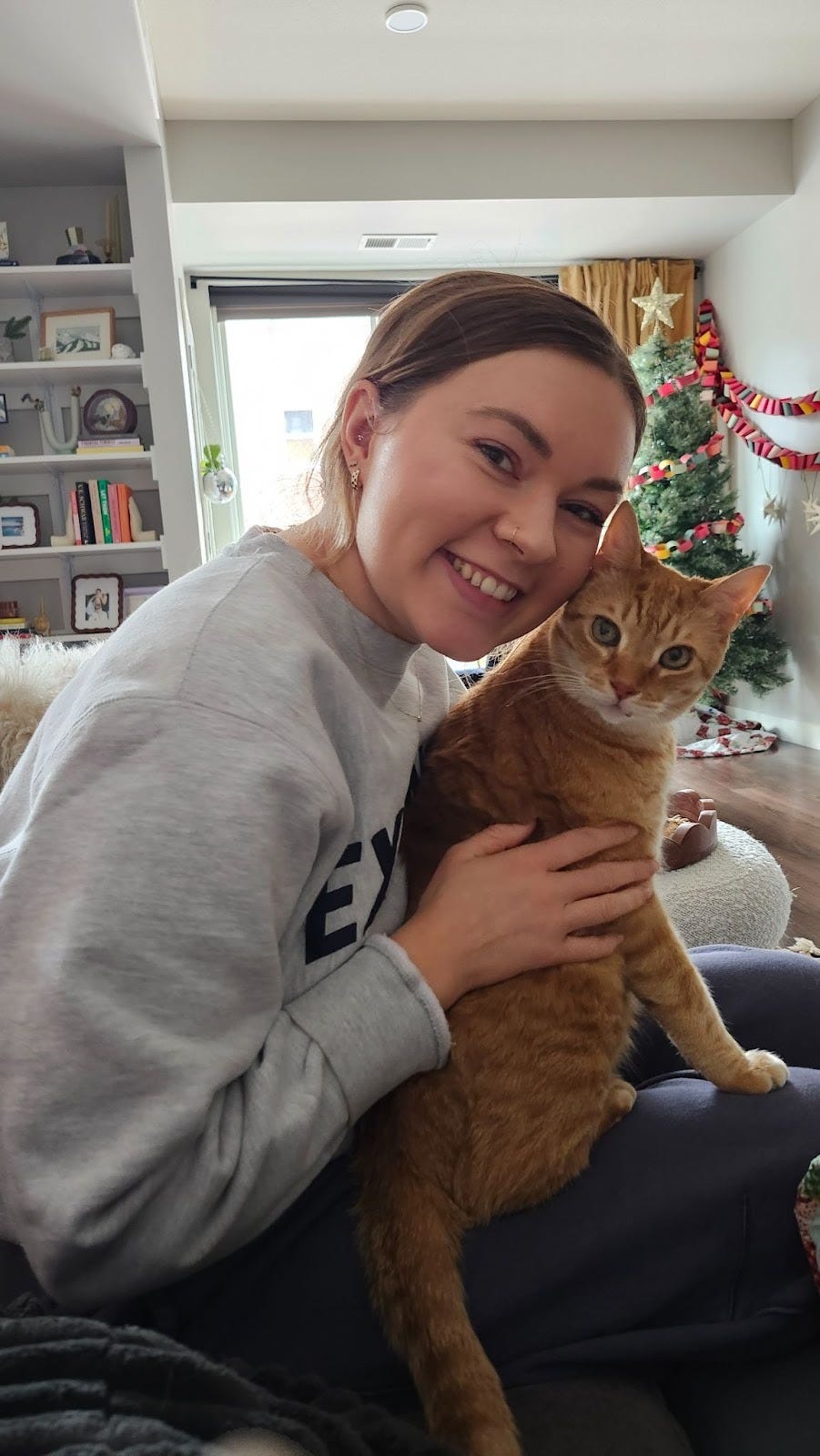
E: The year has (graciously) started off pretty slow, and I’m loving it. My favorite way to spend a dark weeknight or long weekend afternoon is to give myself uninterrupted reading time on the couch. Sometimes I’ll dive into one book; sometimes I’ll have a stack of different options and a local newspaper to peruse. Add a fluffy blanket (and a snuggly corgi) and it’s heaven.
C: Ditto Emily’s uninterrupted reading time ^. It’s been my favorite way to spend my free time this past week. Plus, it usually comes with free Winston snuggles. 😻
Money (mindset) tip of the week 💸
Do a 2-step money reset using Kelsa’s approach:
Step 1: Pick one thing to get clarity on (choose just one).
Set a 10-minute timer and do the simplest version:
Spending clarity: Open your bank app and find your last 5 non-bill purchases. What pattern do you notice?
Debt clarity: Write down each balance + interest rate (even if it’s messy).
Income clarity: Look at your pay stub and note your actual take-home pay.
Savings clarity: Check your savings total and name what it’s for.
Step 2: Do the “no judgment” follow-up.
Ask these three questions:
What was easier than I expected?
What felt annoying or unrealistic?
What’s one tiny tweak I can try next week?
Example: If tracking spending feels miserable, don’t quit — simplify. Try Kelsa’s “bucket” approach for one week:
Fixed (bills), Free (day-to-day spending), Future (saving for upcoming stuff).
Instead of 37 budgeting categories (who has the time?!), you just focus on maintaining these three buckets.
*This is just one example. If you’re not sure what you need clarity on, use this handy worksheet created by yours truly. 🥰
Love ya, bye!
Emily + Cassidy


